KC Chain Coupling
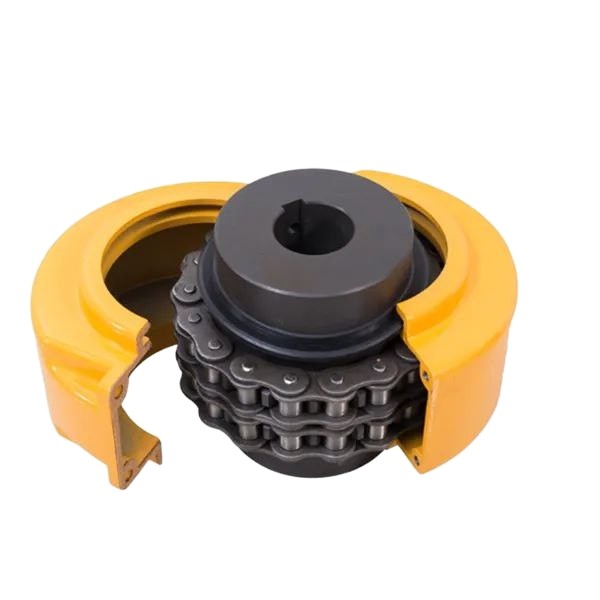
KC Chain Coupling is a mechanical system used to transmit power and rotation between two adjacent shafts. These couplings are commonly applied in industrial machinery, pumping equipment, vehicles, and similar devices to transfer torque and rotational motion.

KC Chain Couplings typically consist of two main parts:
- Chain Plates: These consist of a chain connecting the two sides of the sprocket. The chain is generally standard, requiring minimal maintenance or replacement.
- Coupling Plates: Two flat plates attached to the shafts. Made of steel, aluminum, or similar materials, they connect via bolts or fastening systems to transmit rotation and torque between shafts.
Chain couplings are ideal for transmitting rotation and torque over relatively long distances between shafts. They offer advantages such as compatibility with large shaft spacing, resistance to shocks and vibrations, and easy chain replacement. They are widely used in industrial machinery as quick and effective shaft connectors.
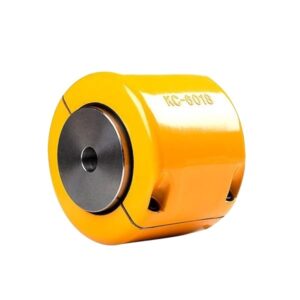
Benefits of KC Chain Couplings:
- High Torque Transmission: Efficiently transfers large torque between shafts, ideal for heavy-duty applications.
- Shock and Vibration Resistance: Robust structure provides excellent resistance to industrial shocks and vibrations.
- Easy Chain Replacement: Chains can be quickly replaced due to wear or damage.
- Versatile Applications: Used in automotive, construction machinery, mining equipment, and pumping systems.
- Quick Connection: Acts as a fast coupling, reducing downtime for maintenance and replacement.
KC Chain Couplings are ideal for high-power, durable transmission needs in industrial environments.
Industrial Applications:
- Automotive Industry: Transmit torque from motors to wheels, connecting engine shafts to gearboxes and powertrain systems.
- Construction Machinery: Transfer torque from motors to twisting and moving components in bulldozers, loaders, etc.
- Mining: Used in heavy-duty machines to transmit torque from motors to mechanical components like rollers and conveyors.
- Pumping Equipment: Connects motor shafts to pump shafts in chemical, oil, and gas industries.
- Food and Agriculture: Powers agricultural and food processing equipment via torque transmission.
Components of KC Chain Couplings:
- Industrial Chain: The core component, made of interconnected links and used to transfer torque and rotation between shafts.
- Sprockets: Often included to adjust rotational speed and torque, maintaining proper ratio between shafts.
- Protective Aluminum Plates: Cover the chain and sprockets for safety, typically made from aluminum or lightweight materials.
Explore Related Products and Services
Choosing this product is a smart first step in protecting your system. For more solutions and industrial support, explore:
- View All Models: Check our main category page to compare different industrial couplings.
- Need a Custom Part? If standard products don’t meet your requirements, our technical team can provide custom industrial coupling manufacturing based on your specifications.
- Increase Your Knowledge: Learn how the right coupling can reduce hidden costs in our article: How Choosing the Right Coupling Reduces Hydraulic Pump Repair Costs.
محصولات مرتبط /Related products
Coupling KB-H (Spice)
CouplingKB
HRC coupling rubber (PVC)
Coupling rubber type: HRC
Material: PVC
Application: Used in pump industries, machinery and agricultural industries, oil and petrochemical industries, food and pharmaceutical industries
Outstanding feature: Due to its reasonable price and easy access, it is one of the most widely used coupling rubbers in the industrial market.
HRC Rubber Coupling (Polyurethane)
UCC coupling (Iran)
- Coupling type: UCC three-piece coupling (made in Iran)
- Gear material (hub): GG25 gray cast iron (wear-resistant and vibration-absorbing)
- Shell material: Teflon | PTFE (functions as a mechanical fuse)
- Main application: Hydraulic, pneumatic, pump manufacturing and industrial gearbox industries
- Outstanding feature: Protective design; Teflon shell breaks against excessive pressure to prevent damage to the pump.
- Key advantage: Reduce maintenance costs; Possibility of replacing the shell separately and inexpensively without having to replace the entire coupling.


