


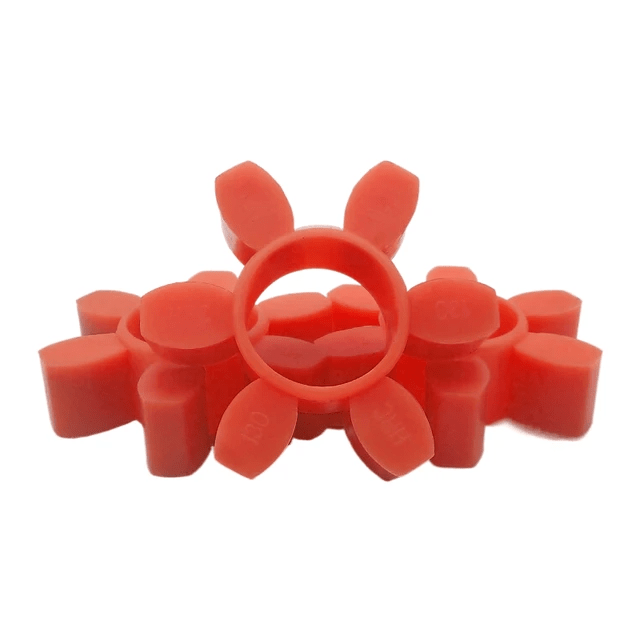


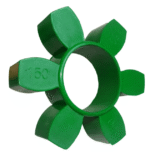

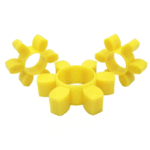
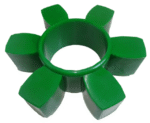

An important product in engineering and mechanical connections, used to connect two shafts in machinery, industrial equipment, and mechanical devices. This type of coupling typically has a single integrated polyurethane (or similar) ring in the center, with holes on both sides for attachment to different shafts.

Below are the key features of this product:
Overall, the “HRC Polyurethane Rubber Coupling” is a key product for connecting shafts in various industries. Its flexibility, resistance to environmental conditions, and energy absorption capabilities make it an ideal choice for mechanical connections in many industrial applications.

Polyurethane (PU) is a plastic material with unique properties, widely used across various industries such as automotive, machinery, electronics, consumer goods, and construction. Key features of polyurethane include:
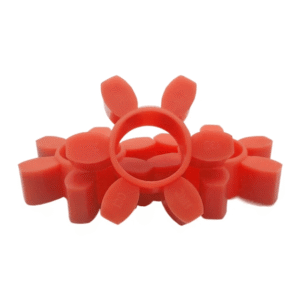
These features make polyurethane a highly versatile and flexible plastic material for various industrial applications.
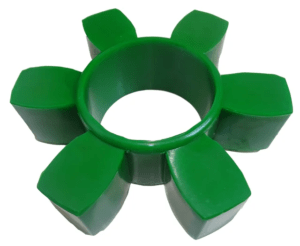

Coupling rubber type: HRC
Material: PVC
Application: Used in pump industries, machinery and agricultural industries, oil and petrochemical industries, food and pharmaceutical industries
Outstanding feature: Due to its reasonable price and easy access, it is one of the most widely used coupling rubbers in the industrial market.

Coupling rubber type: KB (H rubber)
Material: Polyurethane (PU)
Application: Food and pharmaceutical industries, transportation industries, pump manufacturing, oil, gas and petrochemical industries, cement industries
Outstanding feature: Due to the rubber material, the quality and longevity of this type of rubber is high and it is cost-effective.


