


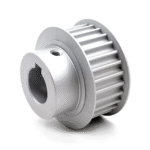
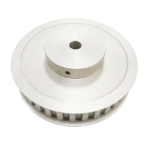


A timing pulley is an important and key component in mechanical systems, used to transfer motion and power from one part of a machine or device to another. These pulleys often have teeth on their edges that engage with timing belts or timing chains.
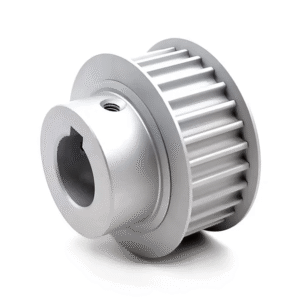
The main function of a timing pulley is to synchronize movement between two or more mechanical parts. This synchronization is crucial in mechanisms that require high precision and coordinated motion. Timing pulleys are connected to other mechanical parts using timing belts or chains to ensure accurate motion and power transfer.
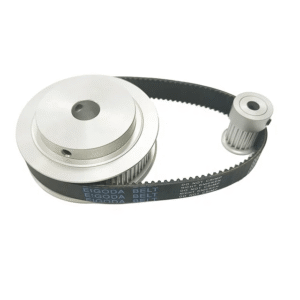
Timing pulleys are made from various materials such as metals (aluminum or steel) or plastics. Each material has different properties and strengths, selected based on the mechanical requirements and conditions of use.

The most important features of a timing pulley include the number of teeth, size, shape, and tooth profile, all designed to ensure precise synchronization with other mechanical parts and devices.
Timing pulleys have extensive applications, including power transmission in industrial machinery, medical devices, electronic equipment, and even gears and engines in automobiles. Proper selection and use of these pulleys improve performance and motion accuracy in mechanical systems.
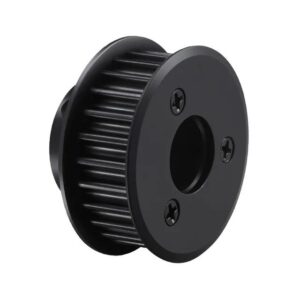
They are usually connected to a power source, such as motors or electric motors, using a belt (timing belt, wire rope), transferring motion and power from one location to another.
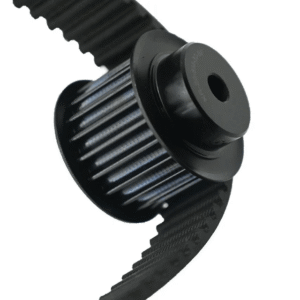

Foley type: Bushed taper (locking)
Material: Phosphate cast iron
Application: Machinery, road construction industry, stone crushing and cement industry, petrochemical oil and gas industries, transportation industry and production lines
Special feature: Faster installation and removal, no need for burrs or holes, if the bushing tipper breaks, it can be replaced at the lowest cost


